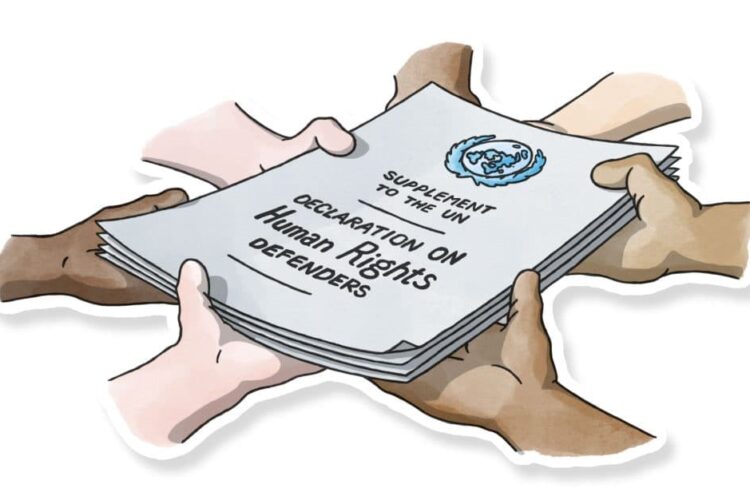
In recent decades, international human rights standards have become a fundamental element in the modernization of legal systems around the world. This influence is especially noticeable within the European legal space, including Slovenia — a country actively integrating international norms into its domestic legislation. The Universal Declaration of Human Rights, the European Convention on Human Rights, and the activities of institutions such as the European Court of Human Rights form the foundation for ensuring justice, legal certainty, and the protection of civil liberties.
Modern Slovenia, as a member of the European Union and the Council of Europe, is guided by the principles of the rule of law and respect for fundamental human rights. This is evident not only in the reform of the judicial system but also in an active legal policy aimed at protecting vulnerable groups, ensuring transparency in public administration, and combating discrimination.
Today, new spheres of social relations, including the digital economy, cybersecurity, and online entertainment — such as online casinos — require jurisprudence to be flexible and ready to reconsider existing legal categories. International human rights standards act here as a compass, indicating the need to protect personal data, the right to privacy, and fair regulation of the digital environment.
If you want to enjoy gameplay in reliable online casinos featuring the best games from renowned global developers, be sure to visit slovenskecasino.net. There you will find only verified platforms offering a vast array of games and exciting opportunities for all fans of gambling entertainment. Each casino provides favorable conditions and bonus offers to make your experience even more interesting and rewarding.
Innovations in Legal Practice: From Technology to New Ethics
Modern jurisprudence is no longer limited to paperwork, oral arguments in courtrooms, and traditional procedures. Artificial intelligence technologies, blockchain, automated legal platforms, and electronic evidence have all become integral parts of legal activity. These changes require legal science and practice to seek new solutions, including ethical ones.
In particular, the use of algorithms in justice sparks much debate. For instance, can algorithms participate in decision-making in criminal cases? How can the transparency of such systems be ensured without violating the human right to a fair trial? The answers to these questions are still emerging, but one thing is already clear: international standards remain the main criterion for the admissibility of new technologies in the legal sphere.
Slovenia has taken significant steps toward the digitalization of its judicial system. The implementation of electronic platforms for filing lawsuits, remote hearings, and digital document management not only speeds up justice but also makes it more accessible to citizens. However, each such step must be balanced with respect for individual rights: data protection, preservation of attorney-client confidentiality, and ensuring a fair process remain top priorities.
The Example of Slovenia: Integrating Innovation with Human Rights
Slovenia provides a clear example of how international standards and the latest approaches to jurisprudence can be successfully combined. The country’s legislation is gradually adapting to the realities of the digital age while maintaining principles of humanism and legal predictability. The adoption of a new personal data protection law in the context of the EU General Data Protection Regulation (GDPR) was a significant step, ensuring a high level of citizen control over their digital footprints.
Special attention should be paid to the work of Slovenian courts and human rights organizations in the field of legal technology implementation. Some law firms already use AI tools to analyze case law, automatically draft documents, and assess legal risks. These tools serve as assistants, not replacements, for lawyers, allowing them more time for strategic work and consultations.
Legal practice has also changed in terms of communication: many procedures can now be conducted remotely, which is especially important for citizens living outside major cities. Such equality in access to justice underscores the importance of complying with international standards, including the right to effective legal protection.
The Future of Jurisprudence: Challenges and Prospects
Despite the progress, jurisprudence faces serious challenges. One of them is the ethical dilemma posed by the introduction of technology into the legal sphere. How can we avoid losing our humanity in the process of automation? Where is the boundary between efficiency and the violation of privacy? How can we ensure that innovation does not create new forms of inequality? Answering these questions requires an interdisciplinary approach and constant monitoring of the consequences of technological decisions.
A promising direction for development remains the strengthening of international cooperation. In the context of globalization, legal problems increasingly transcend national borders, and only the joint efforts of lawyers, policymakers, and technologists can ensure a balance between innovation and human rights protection.
Thanks to its geographical location, historical experience, and openness to international dialogue, Slovenia has every chance to become one of the regional leaders in the field of legal innovation. This requires not only investment in technology but also a sustainable approach to educating a new generation of lawyers who are ready to work in a transforming legal landscape.
Conclusion
International human rights standards continue to be an essential part of legal development in the era of digitalization and global change. They provide the foundation for justice, the protection of human dignity, and the stability of legal institutions. Innovations in jurisprudence do not negate these principles but rather open new paths for their realization. Slovenia has already proven its readiness to follow this path, demonstrating an example of responsible and modern legal thinking, where technology serves humanity — and not the other way around.